Fire debris cleanup is a necessary service after a house fire or wildfire. When a structure burns, it leaves behind charred wood, ash, melted metal, broken concrete, and toxic household chemicals. Cleaning up this debris clears the property so you can safely rebuild your home. Understanding how fire cleanup works in California helps you choose the right options and manage your costs.
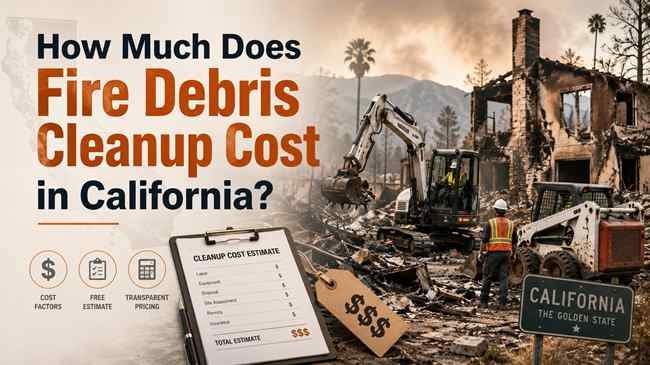
In California, hiring a private contractor for fire debris cleanup costs between $25,000 and $85,000+ for a standard 2,000-square-foot home, or $12 to $35+ per square foot. However, if your property was burned in a declared wildfire disaster, you can enroll in the government-managed Cal OES Consolidated Debris Removal Program. This state program provides complete cleanup at $0 out-of-pocket cost to property owners.
What Is the Average Cost Breakdown for Private Fire Debris Removal in California?
Private fire debris cleanup for a 2,000-square-foot home usually costs between $25,000 and $85,000+. This total price combines six major cleanup phases, including hazardous waste removal ($2,500 to $7,500), ash hauling ($15,000 to $45,000), soil scraping ($4,000 to $12,000), soil testing ($1,500 to $4,500), foundation removal ($7,000 to $18,000), and erosion control ($2,000 to $6,000).
| Fire Cleanup Phase & Task | Cost Range (2,000 Sq. Ft. Home) | How Contractors Charge |
| Phase 1: Household Hazardous Waste (HHW) | $2,500 to $7,500 | Free in state program; private hazmat rates apply. |
| Phase 2: Structural Demolition & Ash Hauling | $15,000 to $45,000 | $90 to $220 per ton landfill dump fees. |
| Soil Scraping (Top 3 to 6 Inches) | $4,000 to $12,000 | Heavy excavator digging and contaminated dirt disposal. |
| Soil Clearance Testing & Lab Analysis | $1,500 to $4,500 | Soil core samples tested by an independent lab. |
| Foundation Demolition & Removal | $7,000 to $18,000 | Breaking concrete pads and hauling rebar. |
| Erosion Control & Hydromulching | $2,000 to $6,000 | Installing straw wattles, silt fences, and grass seed. |
Private contractors provide custom quotes for every home because fire damage is unique. Ash from burnt houses contains heavy metals, lead paint, and asbestos fibers. Because of this contamination, dump sites in California charge high fees to accept fire debris. Also, workers must use heavy excavators to dig up contaminated dirt, which increases total labor and machine hours.
How Does the Cal OES State Program Compare to Private Fire Debris Cleanup?
The state-managed Cal OES Consolidated Debris Removal Program offers $0 direct cost to wildfire survivors by collecting designated insurance debris funds. In contrast, private cleanup costs $25,000 to $85,000+, but it gives homeowners direct control over contractor selection and work schedules.
| Program Feature | Cal OES State Program | Private Contractor (Opt-Out) |
| Out-of-Pocket Cost | $0 Direct Cost to homeowner. | $25,000 to $85,000+ out of pocket or via insurance. |
| Insurance Debris Benefits | State collects designated policy debris money. | Homeowner pays contractor directly with policy funds. |
| Timeline Control | State controls regional schedule (3 to 9 months). | Homeowner hires contractor (2 to 4 weeks). |
| Required Forms | Submit Right-of-Entry (ROE) form to county. | Submit County Private Work Plan and permits. |
| Soil Clearance Cert | State handles testing and grants certificate. | Homeowner pays private soil engineer for testing. |
The California Governor’s Office of Emergency Services (Cal OES) runs the state debris program after major wildfires. This program operates in two phases. First, Phase 1 teams remove household hazardous waste like batteries and propane tanks. Next, Phase 2 crews clear ash, tear out broken foundations, scrape contaminated dirt, and test the soil.
If you join the Cal OES program, you do not pay out-of-pocket fees. However, if your home insurance policy includes specific money for debris removal, the state will collect those designated funds to cover costs. If you do not have insurance, the state still cleans your property for free.
What Factors Increase the Cost of Fire Debris Removal in California?
Six key factors make private fire debris removal more expensive:
- Hazardous Materials: Asbestos siding, lead paint, and burnt lithium solar batteries require certified hazmat crews.
- Soil Contamination Depth: Heavy ash penetration forcing excavators to dig 6 or more inches of topsoil.
- Concrete Foundation Removal: Thick reinforced concrete pads and brick chimneys requiring heavy breakers.
- High Dump Fees: California hazardous waste landfills charging between $90 and $220 per ton.
- Erosion Control Mandates: State water rules requiring straw wattles and hydroseeding on sloped lots.
- Hazardous Tree Removal: Cutting down burned trees that pose a safety risk to workers and roads.
Hazardous Materials and Asbestos
Older California homes built before 1980 often contain asbestos insulation, vinyl tiles, or lead paint. When these homes burn, hazardous fibers mix into the ash. Federal and state safety laws require specialized hazmat workers to spray water mist, wear respirators, and pack debris into double-lined plastic bags. This specialized handling adds thousands of dollars to your project bill.
Deep Soil Scraping and Disposal
Fire ash contains toxic chemicals that sink into the upper layer of dirt. Contractors must scrape off the top 3 to 6 inches of soil across your entire yard footprint. This creates tons of contaminated dirt that must be trucked to special toxic waste landfills. Distance to these specialized landfills increases fuel and dump fees.
What Are the Mandatory Steps for Private Fire Debris Opt-Out in California?
Property owners who choose private contractors must complete six regulatory steps:
- Submit a Private Debris Removal Work Plan: File detailed paperwork with your County Environmental Health Department.
- Hire Licensed Hazardous Waste Contractors: Verify CSLB Class A or C-21 licenses with HAZ safety certifications.
- Complete Phase 1 Hazmat Removal: Safely dispose of paints, batteries, and propane tanks.
- Scrape Soil and Remove Foundation: Excavate ash and concrete down to clean ground.
- Pass Environmental Soil Clearance: Receive laboratory core test results showing clean soil.
- Install Erosion Controls & Get Clearance: Place straw wattles and earn a County Site Clearance Certificate.
If you choose not to join the state program, you must opt-out officially. Your county will not let you rebuild until your private cleanup meets strict state health standards.
First, you must hire a licensed contractor to write a Private Debris Removal Work Plan. This plan explains how your crew will control toxic dust and dispose of hazardous ash. Next, workers remove the ash, break the foundation, and scrape the dirt.
Finally, an independent soil engineer takes soil core samples across your property. The samples go to a state-certified laboratory to test for heavy metals like lead, arsenic, and copper. Once the lab proves your soil is clean, the county issues a Site Clearance Certificate. You need this certificate to apply for new building permits.
Does Homeowners Insurance Cover Fire Debris Removal in California?
Yes. Standard California homeowners insurance policies include debris removal coverage, which is usually 10 percent to 25 percent of your dwelling coverage limit. For example, a $500,000 home policy usually includes $50,000 to $125,000 for debris removal. If cleanup costs exceed this amount, policyholders can use leftover dwelling funds.
Most insurance policies have a separate bucket of money set aside just for debris cleanup. This debris coverage is calculated as a percentage of your total dwelling policy limit.
For example, if your home is insured for $400,000 and your policy has a 15 percent debris clause, you have $60,000 available specifically for cleanup. If your private cleanup bill comes to $50,000, your insurance policy covers the full bill. Also, if your debris expenses go over your debris sub-limit, many insurance companies allow you to use remaining unallocated dwelling funds to cover the difference.
Why Is Soil Clearance Testing Mandatory After a Fire Debris Removal?
Soil clearance testing is mandatory because burning homes release toxic heavy metals like lead, arsenic, and copper into the ground. Asbestos fibers and burnt plastic chemicals also soak into the topsoil. A licensed environmental engineer must test soil samples in a lab to verify the ground is clean before your city issues new building permits.
During a fire, household items like electronics, batteries, paints, and pipes burn at extreme temperatures. This creates a dense layer of toxic ash containing hazardous heavy metals. Rain and fire hose water wash these chemicals deep into the upper soil layer.
If you rebuild your home on contaminated dirt, toxic dust can enter your new house through crawlspaces or air vents. Also, gardening in contaminated soil can expose your family to dangerous chemicals. Because of these health risks, California building departments will not issue rebuilding permits until a certified lab confirms your soil meets state safety standards.
How Can Property Owners Avoid Out-of-Pocket Costs for Fire Debris Cleanup?
Avoid out-of-pocket costs for fire debris removal with these four practical steps:
- Enroll in the Cal OES State Program: Submit a Right-of-Entry (ROE) form to join the free state cleanup program.
- Assign Only Designated Debris Funds: Make sure your insurance assignment covers only specific debris benefits, leaving building funds for your new home.
- Wait for State Inspection Before Starting Work: Do not clear debris yourself before state inspectors visit, as early work can make you ineligible for state aid.
- Verify Private Bids Match Insurance Limits: If you hire a private contractor, get a fixed-price contract that stays within your insurance debris policy limit.
Frequently Asked Questions About California Fire Debris Removal
State-managed Cal OES cleanup usually takes 3 to 9 months across an entire community because crews clean hundreds of properties in scheduled zones. Private contractor cleanup takes 2 to 4 weeks once your County Environmental Health Department approves your Private Work Plan.
Rarely. Extreme heat from a house fire damages the strength of concrete and weakens internal steel rebar. California building codes require a licensed structural engineer to inspect and test the foundation before re-use, but almost all fire-damaged foundations must be completely removed.
If you miss your county’s ROE enrollment deadline, you cannot join the free state program. You must hire a private contractor at your own expense and submit a Private Debris Removal Work Plan to your county health department before clearing your property.
Phase 1 is the government-funded removal of Household Hazardous Waste like batteries, paints, and propane tanks at no cost to property owners. Phase 2 is the removal of structural ash, concrete foundations, contaminated topsoil, and hazard trees.