
Removing a concrete foundation slab is a big home project. A foundation slab is the thick concrete pad under a house or building. People usually remove a foundation slab when they want to rebuild a home, replace a damaged foundation, or clear land for a new project. Understanding the total price helps you plan your budget without any unexpected surprises.
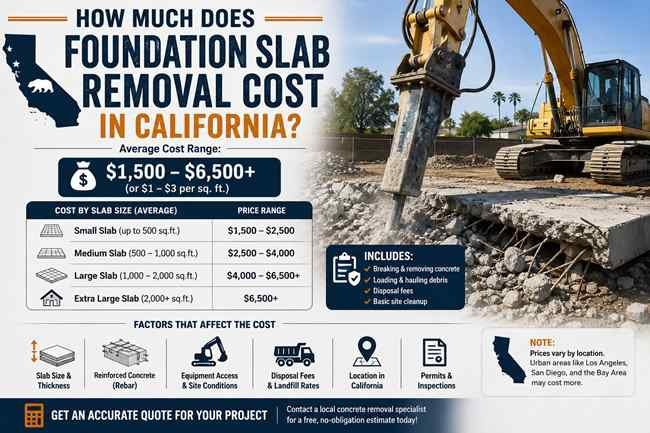
In California, removing a concrete foundation slab costs $4.80 to $8.50 per square foot on average for breaking and hauling the concrete away. For a standard 1,500-square-foot home foundation, total project costs usually range between $10,000 and $25,000. This full price includes municipal permits, utility capping, filling the hole with fresh soil, and soil compaction testing.
What Is the Average Cost Per Square Foot to Remove a Concrete Slab in California?
Standard 4-inch concrete slabs cost $4.80 to $6.50 per square foot to break and haul away. Thicker slabs with steel rebar cost $6.50 to $9.50 per square foot. Post-tensioned slabs with high-pressure cables cost $9.00 to $14.50 per square foot.
| Concrete Slab Type & Depth | Cost Per Square Foot | Total Cost for 1,500 Sq. Ft. Slab |
| Standard Slab (4 inches thick, no rebar) | $4.80 to $6.50 | $7,200 to $9,750 |
| Thick Slab (6 inches thick, with rebar) | $6.50 to $9.50 | $9,750 to $14,250 |
| Post-Tensioned Cable Slab | $9.00 to $14.50 | $13,500 to $21,750 |
| Commercial Slab with Deep Footings | $10.00 to $18.00+ | $15,000 to $27,000+ |
The size and depth of your concrete pad determine your basic cost per square foot. Thicker concrete takes more time and bigger machinery to crack into pieces. Also, many foundation slabs contain steel rebar or wire mesh inside the concrete. Steel holds the broken concrete together, so workers must use metal cutters to slice through the rebar grid. This extra work increases labor time and equipment costs.
How Much Does It Cost to Remove a Full House Foundation Slab in California?
Removing a full house foundation slab in California costs $12,000 to $28,000 for a typical 1,500 to 2,500 square foot home. The total price combines five main expenses: breaking concrete ($7,000 to $14,000), hauling debris ($2,000 to $4,500), city permits ($500 to $1,800), capping utility lines ($800 to $2,200), and filling the hole with dirt ($2,500 to $6,500).
When you tear out a house foundation, breaking the concrete is only part of the work. Here is a clear breakdown of the five main costs that make up your total bill:
- Concrete Breaking and Excavation: Contractors bring in heavy machines like 10-ton excavators with hydraulic breaker hammers. This step breaks the thick slab and footings into small pieces.
- Debris Hauling and Landfill Dump Fees: Concrete is very heavy, weighing about 150 pounds per cubic foot. California landfill dump fees average between $90 and $180 per ton, which adds up quickly when hauling away dozens of tons of waste.
- Utility Disconnection and Line Capping: Plumbers and electricians must shut off water, gas, and sewer pipes. They cap these lines safely 5 feet away from the foundation line.
- Engineered Soil Backfill and Land Grading: After removing the concrete, you are left with a large open hole in the ground. Contractors must bring in clean dirt to fill the space and level the yard.
- Geotechnical Soil Compaction Testing: City inspectors will not let you build a new home until a licensed soil engineer tests the ground. The new dirt must be packed tightly to 95 percent relative compaction so the ground does not sink later.
What Factors Increase the Cost of Foundation Slab Removal in California?
Six key items make foundation slab removal more expensive:
- Slab Thickness and Rebar: Deep concrete and heavy steel grids take twice as long to break.
- Post-Tensioned Cables: High-pressure steel cables require special safety tools.
- Tight Access Space: Narrow side yards force workers to use manual jackhammers.
- High Dumpster Fees: Heavy concrete hauling costs up to $180 per ton in California cities.
- Air Board Dust Control Laws: State rules require water spraying equipment to stop concrete dust.
- Importing Backfill Dirt: Buying fresh dirt and hiring soil engineers for compaction tests.
Concrete Depth and Steel Wire Rebar
Thick concrete requires bigger breaker hammers attached to heavy excavators. If your slab is 6 to 8 inches deep instead of the standard 4 inches, contractors charge more because the job takes longer. Also, steel rebar embedded inside the concrete traps the broken pieces. Workers must cut the steel by hand using saw blades or torches.
Tight Access Around the Property
Heavy excavators need clear paths to drive into your yard. If your property has narrow gates, tall trees, or close neighbor fences, big machines cannot fit. This means workers must use smaller Bobcat loaders or handheld electric jackhammers. Manual work takes extra hours, which can raise labor costs by 30 percent to 50 percent.
Air Quality Regulations and Water Misting
California has strict air pollution rules to protect neighbors from toxic silica dust. Regional groups like the South Coast Air Quality Management District (SCAQMD Rule 1466) require contractors to spray water continuously while breaking concrete. Contractors must set up water tanks, hoses, and dust containment barriers on your property.
What Permits and Inspections Are Required for Foundation Demolition in California?
California requires four main administrative steps before and after foundation demolition:
- Get a City Demolition Permit: Issued by your local Building and Safety Department ($300 to $1,500).
- Get Utility Provider Sign-Offs: Official approval showing gas, electric, and sewer lines are capped.
- Submit Air Board Dust Plans: Filing dust management notices with regional air quality boards.
- Pass Soil Compaction Inspection: Getting a stamped report from a licensed soil engineer.
You cannot start breaking a foundation slab in California without an official permit. City inspectors want to make sure your project is safe for the neighborhood and the environment.
First, you must apply for a building demolition permit at your city hall. The permit fee usually costs between $300 and $1,500 depending on your city. Next, your contractor must contact gas, water, and electric companies. The utility workers will turn off services and give you signed release forms.
Finally, after the slab is gone and fresh dirt fills the hole, a soil engineer must inspect the site. The engineer drives a test rod into the ground to measure soil density. Once the soil reaches 95 percent compaction, the engineer signs a certificate. You need this certificate to close your permit and get future construction permits.
How Do Foundation Slab Removal Costs Vary by Region in California?
Slab removal costs differ across California based on regional labor rates and local landfill fees. The San Francisco Bay Area is the most expensive ($6.50 to $12.00 per sq. ft.), while the Central Valley offers lower rates ($4.50 to $7.50 per sq. ft.).
| California Region | Price Per Sq. Ft. | Total Cost (1,500 Sq. Ft. Project) | Main Local Cost Drivers |
| San Francisco Bay Area | $6.50 to $12.00 | $15,000 to $28,000 | Highest labor rates, steep hills, tight street parking rules. |
| Los Angeles & Orange County | $5.20 to $9.50 | $12,000 to $22,000 | Strict SCAQMD air rules, high landfill dump rates. |
| San Diego County | $5.00 to $9.00 | $11,500 to $21,000 | Hard rocky ground, coastal development permits. |
| Sacramento & Central Valley | $4.50 to $7.50 | $9,500 to $17,500 | Flat land access, lower labor rates, closer dump sites. |
San Francisco Bay Area
Prices in Bay Area cities like San Francisco, Oakland, and San Jose are high. Labor rates are higher in northern California, and narrow city streets make it hard to park heavy dump trucks. Also, city permits take longer to process, which adds to contractor overhead.
Los Angeles and Orange County
Southern California prices sit near the middle of the state average. However, dump fees at local landfills are high due to limited space. Contractors must also spend extra money on water misting setups to follow local air quality standards.
Sacramento and Central Valley
Cities like Sacramento, Fresno, and Bakersfield have lower slab removal costs. Yards in the Central Valley are usually flat and open, allowing contractors to drive large 20-ton excavators right onto the slab. This lets crews finish the demo work much faster.
How Does a Post-Tensioned Slab Affect Demolition Cost and Safety?
A post-tensioned slab has strong steel cables pulled tight inside the concrete. Removing a post-tensioned slab costs $9.00 to $14.50 per square foot, which is 50 to 100 percent more than standard concrete. Contractors must use special radar to find the cables and release their pressure slowly so the steel does not snap violently.
Post-tensioned slabs are common in California homes built on clay or expansive soil. During construction, workers place thick steel cables inside plastic sleeves within the concrete. After the concrete dries, hydraulic jacks pull the cables under thousands of pounds of pressure. This tension holds the slab together and prevents ground cracks.
However, removing a post-tensioned slab is dangerous. If an excavator hammer accidentally strikes a high-pressure cable, the steel can snap with incredible force. A snapping cable can burst out of the concrete and cause severe injury or property damage.
Because of this safety risk, contractors must follow strict steps:
- They use Ground Penetrating Radar (GPR) to locate every cable inside the concrete.
- They cut small relief holes around the cable anchors to release tension slowly.
- They set up steel blast shields around the work zone to protect neighbors.
These extra safety precautions require specialized equipment and certified crew members, which raises the overall project cost.
Frequently Asked Questions About California Foundation Removal
Yes. California building codes require a structural demolition permit from your local city or county building department before tearing out a foundation slab. Permits cost between $300 and $1,500 and require utility capping sign-offs and soil compaction tests.
DIY foundation removal is not recommended. Full house foundations contain thick concrete, steel rebar, and sometimes high-pressure post-tensioned cables. Breaking a slab requires 10-ton excavators and hydraulic breakers. Attempting this work yourself carries high safety risks and can result in severe city code violation fines.
Demolition and debris hauling for a standard 1,500-square-foot concrete slab takes 1 to 3 days for a professional crew with heavy equipment. Filling the open hole with dirt, grading the yard, and finishing soil compaction tests takes an additional 1 to 2 days.
After the concrete is removed, the remaining pit must be filled with clean engineered soil. Contractors dump dirt in layers and compact each layer using heavy rollers until the ground reaches 95 percent relative compaction. A licensed soil engineer inspects the site and issues a compaction certificate so you can build new structures safely.