
Home » Garage Removal Cost Calculator
Garage Removal Cost Calculator
Tearing down an unsafe, decaying, or unwanted garage is an effective way to reclaim backyard space, build an Accessory Dwelling Unit (ADU), or improve your property value. However, calculating the total cost of garage demolition requires evaluating several key structural factors, including vehicle capacity, construction material (wood frame vs. brick masonry), concrete floor slab excavation, utility disconnections, and scrap metal recovery.
Our Garage Removal Cost Calculator provides instant, transparent estimates based on 2026 California regional labor rates, heavy equipment operation, and C&D landfill disposal fees at facilities like the Western Placer Waste Management Authority (WPWMA).
This step-by-step guide explains the exact formula behind our calculator so you can calculate your garage teardown budget with 100% confidence.
Garage Removal Cost Calculator
2. Garage Total Area (Sq. Ft.)
480 sq. ft. (2-Car)
240 sq ft (1-Car)
480 sq ft (2-Car)
800+ sq ft (3-Car/Shop)
⏳ Auto-Closing in 5s (Hover to Pause)
Estimated Total Investment
$0
Estimated Range: $0 - $0
🚗
Garage Teardown & Debris Disposal
$0
🧱
Concrete Slab Removal & Hauling
$0
📋
Roseville Permits & Electric Disconnect
$0
Roseville On-Site Inspection:
How to Calculate Garage Removal Cost With This Calculator Full Process Guide
To calculate an accurate cost to demolish a 2 car garage or 1-car structure, you must evaluate six primary cost factors. Follow these steps to calculate your project’s total out-of-pocket cost.
Step 1: Determine Garage Size & Vehicle Capacity Base Rate
The primary factor in your estimate is total square footage. Standard garage teardowns average between $8.50 and $12.50 per square foot for structural destruction, wall pulling, and debris loading. Select your garage size preset or input custom square footage:- 1-Car Garage (~240 sq ft): Base structural demolition averages $2,450 to $3,800.
- 2-Car Garage (~480 sq ft): Base structural demolition averages $4,800 to $6,900.
- 3-Car Garage (~720 sq ft): Base structural demolition averages $7,200 to $10,500+.
Step 2: Apply Structure Type & Material Factors
The construction material and attachment to your primary residence impact labor intensity:- Detached Wood Frame Garage (Standard):
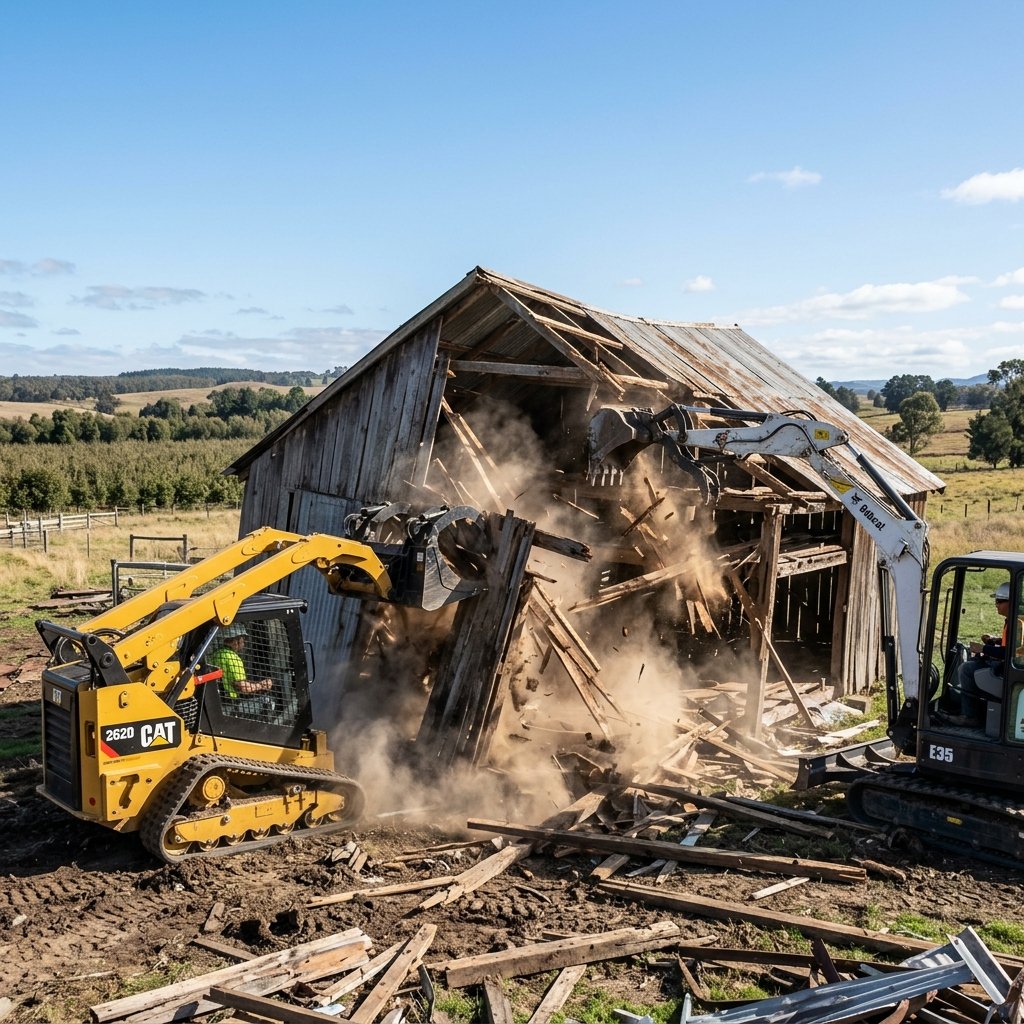
- Easiest to demolish using a standard excavator or skid steer (1.0x factor). Average detached garage demolition cost ranges from $3,500 to $6,500.
- Attached Garage (Wall Sealing Required):
- Requires careful hand-sawing and structural separation from the primary house wall, plus exterior wall weather sealing. Applies a 1.20x complexity factor. Average attached garage removal cost ranges from $5,200 to $8,500.
- Brick / Concrete Block / Masonry Garage:
- Heavy masonry requires hydraulic breaker attachments and extra heavy debris hauling. Applies a 1.25x complexity factor.
Step 3: Calculate Concrete Floor Slab Demolition
Decide whether the concrete floor pad will be removed or left in place for future paving:- Keep Slab Intact (Structure Teardown Only): $0 additional.
- Demolish & Remove Concrete Slab: Breaking up, excavating, and hauling away a 4 to 6-inch concrete garage slab adds $4.00 per square foot (plus the 1.20x regional waste factor).
Step 4: Account for Asbestos & Lead Environmental Compliance
Under EPA NESHAP and regional air quality guidelines, older garages must be evaluated for hazardous building materials:
- Pre-1980 Garages (Mandatory CAC Survey): Requires a Certified Asbestos Consultant (CAC) inspection for transite siding, asbestos roof shingles, or stucco mastic (+$500).
- Minor Asbestos Abatement: If asbestos siding or roofing shingles are present, specialized hazardous abatement adds +$1,450.
- Post-2000 Garages: Modern structures require no asbestos testing ($0 fee).
Step 5: Add Roseville Permit Filings & Utility Disconnect Fees
Garages frequently contain electrical subpanels, auto door openers, exterior lighting, and occasionally water lines or gas heaters:
- Safe Utility Capping: Electrical disconnects and plumbing capping ensure safety during mechanical demolition.
- Roseville Building Permit: Municipal demolition permit processing and city inspection filings add a flat +$450 fee.
Step 6: Deduct the Scrap Metal Salvage Credit
Garages contain significant recyclable scrap metal—including aluminum siding, metal garage doors, steel roof trusses, and copper wiring.
Contractors deduct a scrap metal salvage credit garage offset directly from your final quote:
- 1-Car & 2-Car Garages: Deduct -$300 to -$400 metal credit.
- 3-Car Garages: Deduct -$500 metal credit.
Frequently Asked Questions (FAQ)
How much does it cost to demolish a 2-car garage?
The average cost to demolish a 2-car garage ranges from $4,800 to $8,500. A detached wood-frame structure costs on the lower end ($4,800 to $6,500), while attached garages or concrete block structures with heavy slab removal reach $7,500 to $9,500+.
Can I keep the concrete slab after removing the garage?
Yes. If the existing concrete slab is level, un-cracked, and in good structural condition, you can choose to leave the slab intact. Leaving the slab saves roughly $1,500 to $3,000 in concrete demolition and disposal costs, allowing you to reuse the pad for outdoor patio seating, parking, or a new carport.
How long does it take to tear down a garage?
Mechanical demolition of a 1-car or 2-car garage takes only 1 to 2 days. However, obtaining city demolition permits, completing utility disconnects, and conducting pre-1980 asbestos testing typically takes 2 to 3 weeks prior to start.
Do I need a permit to tear down a garage in Roseville, CA?
Yes. The City of Roseville requires a building demolition permit for any permanent structure removal. Your contractor must submit a permit application, verify electrical/water utility disconnections, and schedule a final site inspection once the debris is cleared.
What is the difference in cost between attached and detached garage demolition?
Attached garage demolition costs approximately 20% more than detached garage removal. Attached structures require hand-sawing and specialized structural separation to prevent damage to the main residence, as well as weatherproofing the exposed wall after removal.