Utility trenching is the process of digging a narrow channel in the ground to install underground pipes and conduits. These conduits protect electrical wires, natural gas pipes, water lines, sewer pipes, and internet fiber optic cables. Property owners need utility trenching when building a new home, upgrading an electrical panel, installing an EV car charger, or running power to a backyard workshop. Understanding the total price helps you plan your project budget and choose the right installation method.
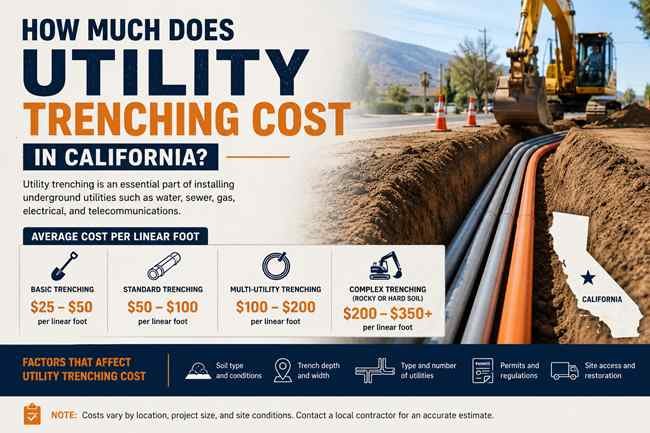
In California, utility trenching costs $5 to $45+ per linear foot on average for basic dirt digging and backfilling. Complete utility installations including Schedule 40 PVC conduit, sand bedding, and backfill cost $25 to $75+ per linear foot for joint electric, gas, and water trenches, while cutting through asphalt or street pavement costs $45 to $120+ per linear foot.
What Is the Average Cost Per Linear Foot for Utility Trenching in California?
Utility trenching costs depend on the surface material you must dig through. Digging in open dirt costs $5 to $15 per linear foot. Cutting through asphalt driveways costs $20 to $45 per linear foot. Joint utility trenches with conduits cost $35 to $85 per linear foot, while directional drilling under obstacles costs $15 to $80 per linear foot.
| Surface & Trenching Type | Cost Per Linear Foot | Total Cost for 100-Foot Trench | Key Inclusions & Benefits |
| Open Dirt / Unpaved Yard | $5 to $15 | $500 to $1,500 | Simple backhoe digging, clean backfill, rough grading. |
| Asphalt Pavement (Driveway) | $20 to $45 | $2,000 to $4,500 | Saw cutting asphalt, trench digging, T-top repaving. |
| Concrete Sidewalk / Slab | $30 to $60 | $3,000 to $6,000 | Concrete saw cutting, breaker demo, concrete pouring. |
| Joint Utility Trench (Power/Gas/Fiber) | $35 to $85 | $3,500 to $8,500 | Sand bedding, PVC conduit, warning tape, inspections. |
| Directional Drilling (Trenchless HDD) | $15 to $80 | $1,500 to $8,000 | No surface digging; pulls conduit under driveways. |
Digging in soft dirt is the fastest and cheapest option because contractors can use mini-excavators or walk-behind trenchers. However, if your utility line must cross a paved driveway or sidewalk, workers must cut the hard surface using diamond saw blades. This extra cutting work and the cost of repaving the surface increase your total project bill.
How Much Does a 100-Foot Utility Trench Cost in California?
A 100-foot utility trench in California costs between $1,500 and $7,500 for a typical residential property. The total cost combines five core expenses: trench digging labor ($500 to $2,500), PVC conduit and wire pipe ($400 to $1,200), sand bedding and warning tape ($300 to $800), city permits ($500 to $1,500), and surface repaving or dirt grading ($500 to $2,000).
When you install a 100-foot utility line, your contractor completes several distinct tasks. Here is a clear breakdown of the five main costs that make up your total bill:
- Excavation Labor and Machine Operation: Digging the ditch using excavators or trenchers ($5 to $25 per foot).
- Conduit Pipes and Sand Bedding: Installing Schedule 40 or Schedule 80 PVC conduit and pouring a 4-inch protective sand envelope around the pipes.
- Color-Coded Warning Tape: Placing bright plastic warning tape above the sand (red for electric lines, yellow for gas, orange for fiber).
- City Encroachment Permits and Inspections: Securing municipal building permits for utility work ($500 to $2,000).
- Backfill Compaction and Surface Patching: Compacting soil to 95 percent density and patching concrete or asphalt.
What Factors Increase the Cost of Utility Trenching in California?
Six key items make utility trenching more expensive in California:
- Surface Hardness: Cutting through reinforced concrete or street asphalt costs 3x to 5x more than dirt digging.
- Trench Burial Depth: Deep trenches over 36 inches require shoring shields to protect workers from soil cave-ins.
- Rocky Soil and Granite: Hard clay, granite boulders, or shale requiring hydraulic rock breakers.
- City Street Cut Moratorium Fees: Municipal surcharges ($5,000+) on recently repaved streets.
- USA 811 Hand-Digging Rules: Mandatory manual shoveling within 24 inches of marked utility lines.
- Utility Inspection Fees: Hourly inspector charges ($150 to $250 per hour) from PG&E, SCE, or local city inspectors.
Surface Material and Pavement Saw Cutting
Digging through open dirt takes a fraction of the time needed to cut through paved surfaces. If your trench path crosses a paved driveway or street, contractors must bring in heavy concrete saws to slice clean edges. After laying the conduit, workers must pour new concrete or lay hot asphalt, which adds material and labor costs.
USA 811 Hand-Digging Tolerance Zones
California state law requires contractors to preserve existing underground pipes. When workers dig near marked gas, water, or electric lines, they cannot use heavy excavators within 18 to 24 inches of the mark. Instead, workers must dig by hand using shovels or vacuum excavation trucks. Manual digging takes extra hours, which increases your overall labor cost.
What Are the Mandatory Utility Depth and Separation Rules in California?
California building codes (Title 24) and power company rules enforce strict trench depth and pipe separation gaps:
- Electrical Conduit Burial Depth: 18 to 24 inches deep in dirt yards; 24 to 36 inches deep under driveways.
- Gas Line Burial Depth: 12 to 24 inches deep with mandatory yellow warning tape placed above the pipe.
- Water and Sewer Burial Depth: 12 to 24 inches for fresh water; 18 to 36 inches for sewer pipes (placed below water lines).
- Mandatory 12-Inch Utility Separation: Minimum 12-inch gap between power, gas, and telecom conduits in joint trenches.
You cannot throw electrical wires and gas pipes together into a single narrow hole. California building codes require proper depth and spacing to keep your home safe.
Electrical conduits must be buried at least 18 inches deep in private yards to protect wires from lawnmowers and garden tools. Under driveways, the burial depth increases to 24 or 36 inches to support the weight of heavy cars. Also, when placing power lines and gas pipes in the same trench, contractors must maintain at least a 12-inch gap between conduits to prevent heat or electrical sparks from affecting gas lines.
How Does Open-Cut Trenching Compare to Directional Drilling in California?
Open-cut trenching digs an open ditch through lawns and driveways ($15 to $60 per foot), requiring expensive repaving. Horizontal Directional Drilling (HDD) drills underground without breaking the surface ($15 to $80 per foot), saving money on concrete and lawn repairs.
| Feature & Metric | Open-Cut Trenching | Horizontal Directional Drilling (HDD) |
| Cost Per Linear Foot | $15 to $60 (Dirt / Asphalt) | $15 to $80 (Trenchless) |
| Surface Impact | High (Tears up lawns, driveways, sidewalks). | Zero Surface Damage (Drills underground). |
| Repaving Expenses | Expensive ($20 to $50 per sq. ft. asphalt/concrete). | $0 Repaving Cost (No surface cuts). |
| Best Application | Open yards, new construction, joint trenches. | Driveway crossings, street crossings, mature yards. |
| Project Speed | 1 to 3 days (Includes backfilling and repaving). | 1 day (Fast underground conduit pulling). |
Open-Cut Trenching
Open-cut trenching is the traditional method of using an excavator to dig an open ditch from point A to point B. It works best for new construction sites where the ground is already open dirt. However, if your yard has expensive pavers, brick walkways, or mature trees, open trenching destroys those surfaces.
Horizontal Directional Drilling (HDD)
Directional drilling is a trenchless technology. A specialized drill rig sits at one end of your yard and drills a small horizontal tunnel deep underground. The machine pulls PVC conduit back through the hole without disturbing your driveway or landscaping. While HDD machine operation costs slightly more per foot, it saves thousands of dollars by avoiding concrete repaving costs.
Why Is Calling 811 Mandatory Before Trenching in California?
Calling 811 (Underground Service Alert) at least two business days before trenching is legally mandatory in California under Government Code 4216. Utility crews mark buried lines for free. Digging without calling 811 carries fines up to $50,000, plus full financial liability for line repairs (averaging $3,500 per hit) and severe explosion or electrocution risks.
Underground utility pipes carry high-voltage electricity, high-pressure natural gas, and water under heavy pressure. Striking a gas line with a backhoe bucket can trigger an explosion, while cutting a power line can cause fatal electric shocks.
Calling 811 is a free service provided by California utility companies. When you call 811 or place a request online at Call811.com, utility technicians visit your property within two business days. They spray color-coded paint lines on the ground so your excavation crew knows exactly where it is safe to dig.
Frequently Asked Questions About California Utility Trenching
Yes, but they must maintain strict separation. California building codes require a minimum of 12 inches of well-compacted earth or sand separation between electrical conduits and water lines, with electrical conduits placed below or beside water lines.
The property owner is responsible for digging the trench, installing PVC conduit, placing sand bedding, and backfilling according to utility specifications. PG&E or SCE technicians only pull the high-voltage electrical cable through your conduit and connect the meter.
Residential electrical conduit must be buried at least 18 inches deep in dirt yards and 24 inches deep under driveways or parking areas under California Electrical Code (Title 24).
A professional crew with a mini-excavator can dig and install conduit for a 100-foot dirt trench in 1 day. Projects requiring concrete saw cutting, city inspections, and asphalt repaving take 2 to 3 days.