
Taking out an old swimming pool in California is a major project for any homeowner. Before you begin hiring workers, you need to know the true cost. In California, removing a pool usually costs between $3,000 and $15,000. However, large concrete pools with tight yard access can cost up to $25,000 or more.
In this guide, you will learn about the different ways to remove a pool. You will also see itemized costs, city permit rules, and soil testing fees across California.
What Is The Average Pool Removal Cost?
| Removal Method | Typical Cost Range | Land Buildability Status | Job Timeline |
| Above-Ground Pool | $500 – $2,500 | Fully Buildable | 1 to 2 days |
| Partial Infill (Abandonment) | $3,500 – $10,000 | Unbuildable Space | 2 to 4 days |
| Full Engineered Removal | $7,000 – $25,000+ | Certified Buildable | 3 to 7 days |
California Pool Removal Cost Breakdown (By Method & Pool Type)
The total price depends mostly on the removal method you select. California cities have strict rules about how pools are removed and filled in.
Above-Ground Pool Removal ($500 – $2,500)
Above-ground pools are the easiest and cheapest to take down. Workers drain the water, disassemble the metal or vinyl walls, and haul away the pool pump and liner. Next, they level out the dirt underneath the frame. This simple job takes only one or two days.
Partial Pool Removal / Abandonment ($3,500 – $10,000)
Partial pool removal is often called pool abandonment. In this method, workers punch holes in the bottom of the concrete pool so rainwater can drain. Next, they break down the top 18 to 36 inches of the concrete pool walls. They toss the broken concrete into the bottom and fill the rest of the hole with soil and gravel.
This option costs less up front, but it has a big downside. California city building departments label partially filled pools as unbuildable space. This means that you cannot build a home extension, garage, or patio cover over that spot in the future.
Full Engineered Pool Removal ($7,000 – $25,000+)
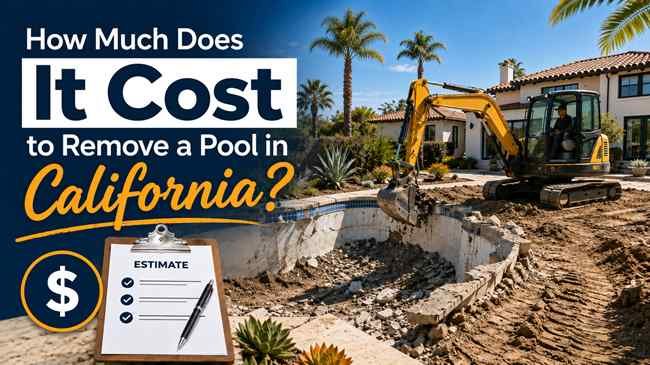
In a full engineered removal, workers break up and haul away the entire concrete pool shell. No old concrete or metal rebar stays in the ground. Next, trucks bring in clean fill dirt to fill the empty hole. Heavy machines compact the dirt in thin layers.
During the job, a soil engineer tests the ground to make sure it is solid. This full method costs more money, but it restores your yard to certified buildable land. This means that you can safely build an accessory dwelling unit, deck, or home addition over the area.
Concrete vs. Vinyl & Fiberglass Pool Teardown Costs
The material of your pool also changes the final bill:
- Concrete and Gunite Pools ($7,000 – $25,000+): Concrete pools are heavy and take the most work to smash and haul away.
- Vinyl Liner Pools ($4,000 – $9,000): Workers remove the vinyl liner and break down the steel or plastic side panels.
- Fiberglass Pools ($5,000 – $12,000): Crews cut the thick fiberglass shell into pieces or lift it out with a crane before filling the hole.
Line-Item Cost Factors: Where Your Money Actually Goes
When you get a price quote from a demolition contractor, your money goes toward several specific expenses:
- Demolition Labor and Machine Use (35% of budget): Pays for heavy excavators, skid steers, and equipment operators.
- Concrete Hauling and Dump Fees (25% of budget): Pays for dump trucks and landfill tipping fees.
- Clean Fill Dirt Import (20% of budget): Pays to buy and transport tons of clean soil.
- Permits and Soil Engineering (15% of budget): Pays city permit fees and soil testing reports.
- Utility Line Capping and Water Removal (5% of budget): Pays to disconnect electric lines and drain pool water safely.
Geotechnical Soil Compaction & Engineering Sign-Off ($1,200 – $3,000)
If you choose a full pool removal, California building codes usually require a soil engineering report. A licensed soil engineer comes to your yard while the hole is being filled. They test the dirt density using specialized gauges.
The engineer verifies that the soil meets a 90% relative compaction standard. This step ensures that the dirt will not sink or crack under heavy weight later. Soil testing reports cost between $1,200 and $3,000, but they provide the paperwork you need for city permits.
Clean Fill Dirt Import Costs ($15 – $40 per ton)
Filling an empty swimming pool takes a huge amount of dirt. An average inground pool needs between 50 and 120 tons of clean soil.
Delivered clean fill dirt costs between $15 and $40 per ton in California. This means buying dirt alone will add $1,000 to $3,500 to your total cost. Contractors must use clean, certified dirt without rocks, trash, or chemical waste.
Backyard Equipment Access Constraints
Excavators and dump trucks need space to get into your backyard. Most heavy demolition machines require a gate opening that is at least 6 to 8 feet wide.
If your side yard gate is narrower than 4 feet, contractors must use smaller micro-excavators or wheelbarrows. In tight spaces, some jobs require a large crane to lift machines over your house roof. These access challenges can add $1,500 to $4,000 in extra labor fees.
California Legal, Environmental & Real Estate Requirements
California regulates pool removals to protect local groundwater and neighbors. Skipping required permits can cause legal trouble when you sell your home.
[!IMPORTANT] California Real Estate Rule: You must legally tell future buyers if a pool was filled in on your property. Having official permits and soil compaction reports protects your home value.
City and County Demolition Permits ($150 – $1,600)
Every city in California requires a demolition permit before you fill in a pool. Permit fees cost between $150 and $1,600 depending on your city.
City inspectors visit your yard at least twice. First, they check the empty pool shell before backfilling begins. Second, they perform a final inspection to confirm that the dirt is smooth and utility lines are safely sealed.
Water Drainage & Environmental Rules
You cannot simply pump thousands of gallons of chlorinated pool water into the street gutter. California water rules prohibit dumping chemicals into storm drains.
First, you must let pool chemicals break down naturally for at least 10 days until chlorine levels drop to zero. Next, some cities require you to pump the water directly into your home sewer cleanout pipe. Following these drainage rules prevents fines from local water pollution officers.
California Real Estate Disclosures & Property Value Impact
Under California real estate law, sellers must complete a Transfer Disclosure Statement. On this form, you must answer whether any unpermitted building work or soil fill occurred on the property.
If you perform an unpermitted partial pool fill, buyers may demand price discounts or backed-out deals. However, if you complete a full removal with a certified soil compaction report, buyers know the yard is safe for future construction. This proper paperwork protects your property value.
Summary Checklist for Property Owners
Follow these four simple steps to remove your pool correctly:
- Decide Your Future Yard Use: Choose a full engineered removal if you want to build structures later, or a partial infill if you only want open lawn space.
- Apply for City Demolition Permits: Contact your city building department to pay permit fees and schedule inspections.
- De-chlorinate and Drain Pool Water: Let chlorine dissipate before pumping water out according to local water district rules.
- Hire a Licensed Demolition Contractor: Hire a licensed and insured contractor who works with a geotechnical engineer to test soil compaction.
Frequently Asked Questions
No. In many California housing markets, removing an old or broken pool actually increases home value. Many home buyers prefer a grassy yard or space for an accessory dwelling unit over an expensive pool that needs repairs.
Yes, but only if you complete a full engineered pool removal. A licensed soil engineer must test and certify that the backfilled soil reaches 90% compaction. You cannot build an ADU over a partial pool infill.
If you want the area marked as buildable land by your city, yes. Most California cities require a geotechnical engineer to test and sign off on the soil compaction before closing your permit.
The physical work of breaking concrete and filling dirt takes three to seven days. However, getting city permits, letting chlorine drop, and completing soil inspections takes two to four weeks total.