
Kitchen demolition is the process of tearing out old cabinets, countertops, appliances, floor tile, and drywall before installing a new kitchen. Homeowners tear out a kitchen when updating old cabinets, repairing water damage, or removing walls to create an open floor plan. Understanding demolition costs helps you set an accurate budget for your kitchen remodel.
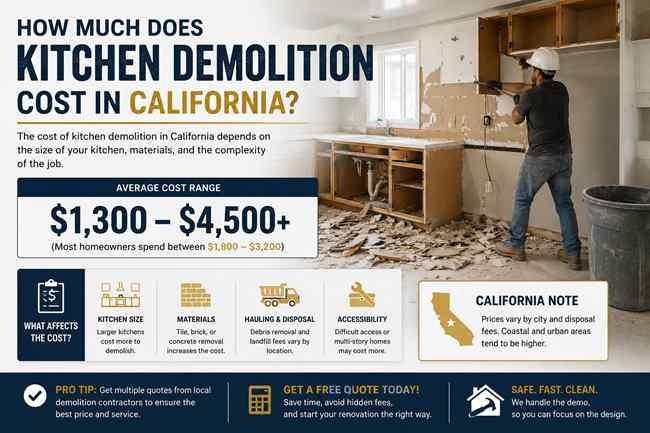
In California, kitchen demolition costs $5 to $12 per square foot, or $1,500 to $5,500 on average for a standard 200-square-foot kitchen. Simply removing cabinets and countertops costs $500 to $1,800, while a full gut demolition with wall removal and subfloor scraping costs $3,500 to $10,000+.
What Is the Average Cost Breakdown for Kitchen Demolition in California?
Kitchen demolition costs depend on how much material you tear out. Basic cabinet removal costs $15 to $20 per linear foot ($300 to $1,200 total). Stone countertop removal costs $200 to $600. Tile flooring removal costs $2 to $6 per square foot ($400 to $1,500), while load-bearing wall removal costs $1,500 to $15,000+.
| Kitchen Demolition Task | Cost Range (Standard Kitchen) | Pricing Metric | Main Purpose & Inclusions |
| Cabinet Removal | $300 to $1,200 | $15 to $20 per linear ft. | Unscrewing upper and lower cabinet boxes. |
| Countertop Removal (Granite/Quartz) | $200 to $600 | $5 to $12 per sq. ft. | Breaking stone slabs and hauling heavy waste. |
| Tile or Hardwood Flooring Tear-Out | $400 to $1,500 | $2 to $6 per sq. ft. | Chiseling tile, underlayment, and subfloor prep. |
| Plumbing & Gas Utility Disconnection | $400 to $1,200 | Flat Service Fee | Capping water lines, gas supply, and 240V lines. |
| Load-Bearing Wall Removal | $1,500 to $15,000+ | Project Quote | Structural engineer, shoring, and steel beam install. |
| Asbestos & Lead Abatement | $800 to $4,500 | $5 to $40 per sq. ft. | Pre-1980 linoleum and popcorn ceiling cleanup. |
Cosmetic demolition is fast and straightforward because workers only unscrew cabinets and lift countertops. However, if you plan a full gut demolition, contractors must strip the room down to wooden wall studs. This extra labor increases garbage volume and total project hours.
How Much Does It Cost to Remove Cabinets and Countertops in California?
Removing kitchen cabinets and countertops in California costs between $500 and $1,800. Removing upper and lower wall cabinets costs $15 to $20 per linear foot ($300 to $1,000 total). Breaking and hauling stone countertops like granite or quartz costs $200 to $600 due to heavy slab weight and dump fees.
When workers remove cabinets and countertops, they complete several distinct tasks. Here is a clear breakdown of the five main costs that make up your total bill:
- Upper and Lower Cabinet Disassembly: Unscrewing wall anchors and lifting cabinet boxes off drywall.
- Stone Countertop Removal: Breaking tile tops or lifting 300-pound granite and quartz slabs.
- Sink and Disposal Shut-Off: Plumbers turn off water supply valves and disconnect P-trap drain lines.
- Tile Backsplash Scraping: Chiseling wall tile down to the drywall sheet.
- Debris Hauling and Dump Fees: Landfills in California charge $90 to $180 per ton for building waste.
What Factors Increase Kitchen Demolition Costs in California?
Six main items make kitchen demolition more expensive in California:
- Load-Bearing Wall Removal: Installing structural steel or LVL support beams ($1,500 to $15,000+).
- Pre-1980 Asbestos and Lead: Testing materials ($250 to $850) and hiring certified hazmat cleanup crews.
- Thick Tile Flooring Tear-Out: Chiseling ceramic tile and thick mortar beds ($2 to $6 per sq. ft.).
- Moving Gas and Water Pipes: Hiring licensed plumbers and electricians to re-route utility lines.
- High Dumpster and Tipping Rates: California construction waste sorting rules (SB 1383).
- Condo and HOA Work Rules: Elevator protection, floor runners, and restricted work hours.
Removing Load-Bearing Structural Walls
Removing a wall to create an open kitchen is popular, but load-bearing walls hold up your roof or upper floor. Contractors cannot simply knock a load-bearing wall down with sledgehammers. First, a structural engineer must inspect the house. Next, workers build temporary support walls, remove the old wall studs, and lift a heavy steel beam into the ceiling.
Pre-1980 Asbestos and Lead Paint Rules
California has strict environmental laws to protect workers and families. Older kitchens built before 1980 often contain asbestos in linoleum tile backing, wall plaster, or acoustic ceiling spray. If test results show asbestos, contractors must seal the room in plastic sheeting, run air scrubbers, and wear special respirators while removing materials.
How Much Does It Cost to Remove a Wall for an Open-Concept Kitchen in California?
Removing a simple partition wall costs $500 to $2,500. Removing a load-bearing wall costs $1,500 to $15,000+. This higher price covers hiring a structural engineer ($500 to $2,000), building temporary support walls, and installing a heavy steel or LVL beam to hold up the ceiling.
Removing a non-load-bearing wall is simple because the wall only divides space. Workers shut off power, cut drywall, pull out wood studs, and patch the ceiling.
However, removing a load-bearing wall is major structural work. First, a structural engineer calculates the weight of your house and specifies the exact size for a new support beam. Next, crews build temporary wooden walls on both sides of the target wall. Finally, workers cut out the old studs, raise a heavy steel or engineered wood beam, and transfer the roof load onto new end posts.
How Does Partial Kitchen Demo Compare to Full Gut Demo in California?
Partial demolition costs $500 to $1,800 and takes 1 day for cabinets and countertops. Full gut demolition costs $2,000 to $5,000 and takes 1 to 2 days for all surfaces. Structural open-concept demo costs $4,500 to $18,000+ and takes 3 to 5 days.
| Demolition Scope Type | Average Cost Range | Project Duration | Inclusions & Work Performed |
| Partial / Cosmetic Demo | $500 to $1,800 | 1 Day | Cabinet removal, countertop removal, sink disconnect. |
| Standard Full Gut Demo | $2,000 to $5,000 | 1 to 2 Days | Cabinets, counters, backsplash, flooring, soffits, appliances. |
| Structural Open-Concept Demo | $4,500 to $18,000+ | 3 to 5 Days | Full gut demo + load-bearing wall removal, beam install, pipe moves. |
Why Is Pre-1980 Asbestos Testing Mandatory in California?
Asbestos testing is mandatory in California before tearing into homes built before 1980. Disturbing old linoleum backing, popcorn ceilings, or plaster releases microscopic asbestos fibers into the air. Certified inspectors take core samples ($250 to $850). If positive, specialized hazmat teams must clean the room under strict safety containment rules.
Asbestos was popular in building materials before 1980 because it resists heat and fire. However, breathing microscopic asbestos dust causes severe lung damage over time.
When you break old kitchen floor tiles or tear down plaster walls, hidden asbestos fibers float into your home air system. To prevent toxic exposure, California air quality districts require property owners to hire certified inspectors before demolition begins. If tests confirm asbestos, certified containment crews must seal the kitchen in plastic sheeting and use air scrubbers to clean the space safely.
Frequently Asked Questions About California Kitchen Demolition
Cosmetic kitchen demolition like unscrewing cabinets and breaking countertops does not require a permit. However, removing walls, moving gas lines, re-routing plumbing, or modifying electrical circuits requires a municipal building permit ($150 to $1,500).
Demolition for a standard kitchen takes 1 to 2 days for a professional crew. Projects that involve load-bearing wall removal, steel beam installation, or asbestos abatement take 3 to 5 days.
Yes. If your cabinets are solid wood and in good condition, workers can back out wall screws without damaging the face frames. Preserved cabinets can be resold online or re-used in garages and laundry rooms.
DIY kitchen demolition requires safety gear (respirator mask, goggles, work gloves), pry bars, a cordless drill, flathead screwdrivers, a sledgehammer, utility knives, and a heavy-duty shop vacuum.